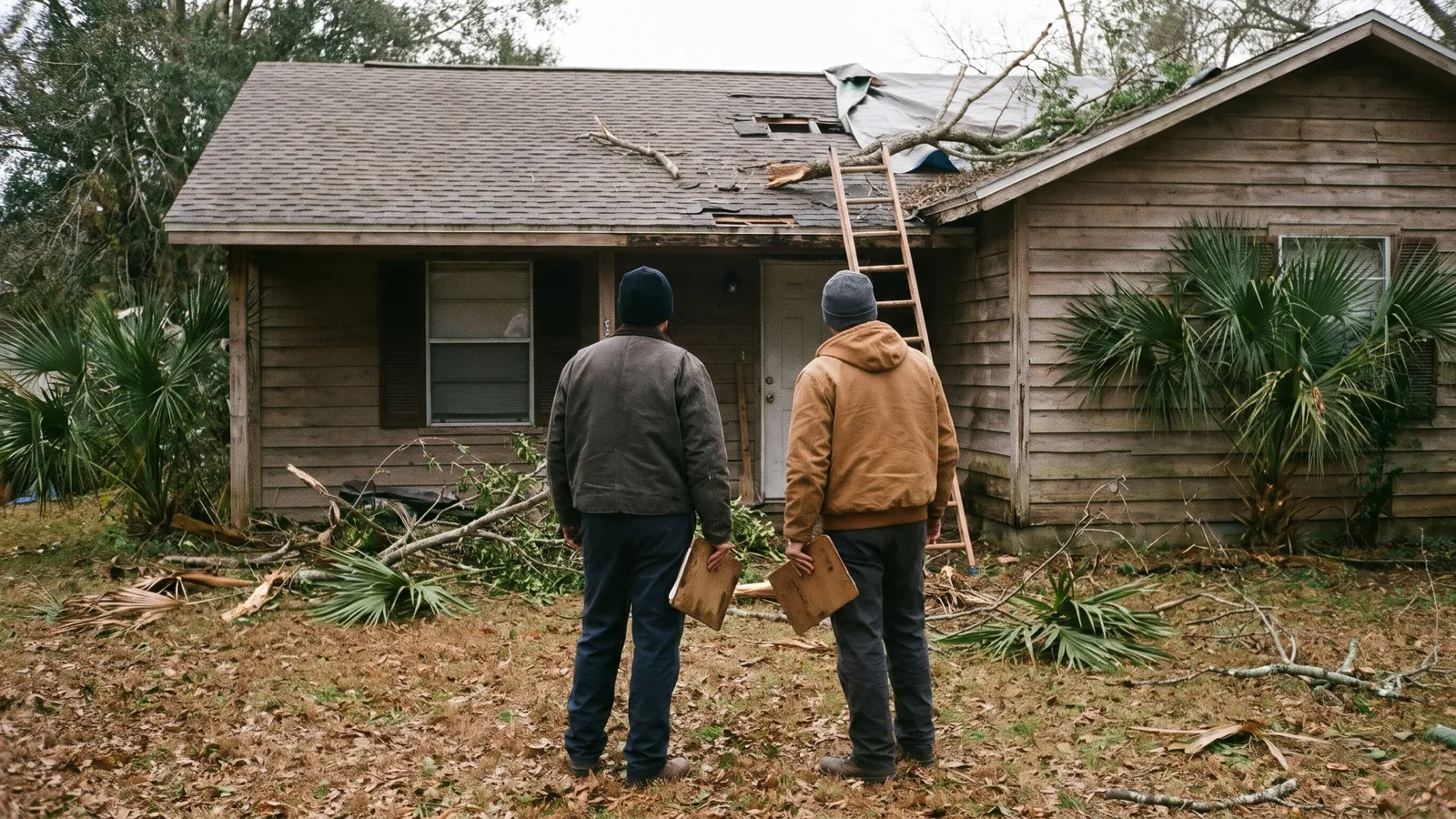
Filing a roof insurance claim after a Florida storm
A clear, well-documented claim moves faster. Here is the order that works best, and where a roofer fits in.
Step by step
Stay safe, then stop the water
Keep off the roof. Put buckets down, move belongings, and get a tarp on any opening. Keep receipts; many policies expect you to prevent further damage.
Take your own photos
Damage outside, stains and wet areas inside, debris in the yard, with dates. Photograph before anything is cleaned up.
Report the claim promptly
Call your insurer or use their app, and note the claim number. Policies set deadlines for reporting, so check yours and don't wait.
Get the roof documented
A roofer measures and photographs every slope and writes up the damage and the repair. We do this for free.
Meet the adjuster
Being there, with the roofer if you like, means nothing is missed. Point out interior damage too.
Review the estimate, then repair
Compare the insurer's estimate with the roofer's scope. Ask about anything left out before you sign off.
What we do and don't do
We handle the roofing side: emergency cover, damage documentation, a written scope, meeting the adjuster and the repair itself. We do not negotiate your claim or act as a public adjuster, and we never ask you to sign over your insurance benefits. Coverage and your deductible are between you and your insurer.
Watch out for anyone knocking on doors after a storm who offers to "cover your deductible" or asks you to sign before they have shown you any damage. Ask for a Florida roofing license number and check it.
Common questions
Do I need a roofer before the adjuster comes?
It helps. A roofer's photos and measurements give you something to compare with the adjuster's findings.
What if the claim is denied?
Ask your insurer for the reason in writing. You can request a re-inspection or seek advice; we can provide our documentation.